Learn more about TMS
-
TMS uses gentle magnetic pulses to stimulate specific areas of the brain known to be underactive in patients with depression. By "waking up" these neural pathways, TMS helps restore normal brain function and lift your mood.
Highly Effective: High response rates, even for individuals who have battled severe, long-term depression.
Non-Invasive & Medication-Free: No surgery, no anesthesia, and no systemic side effects like weight gain or fatigue.
Zero Downtime: Sessions take just 20 to 40 minutes. You can drive yourself to your appointment and immediately return to work or school.
Seamless Integration: TMS can be completed as a standalone treatment or integrated right into your PHP or IOP schedule.
-
Transcranial Magnetic Stimulation (TMS) is an innovative, non-invasive treatment that uses gentle, highly focused magnetic pulses to stimulate under active brain cells. It is a proven alternative for adults who haven't found relief from traditional antidepressants or who struggle with their side effects. Because TMS is a simple outpatient procedure that requires no anesthesia, you remain completely awake, alert, and comfortable during your sessions—allowing you to easily get back to your day.
-
TMS may be right for you if:
You’re living with depression that hasn’t improved enough with medication or therapy. TMS is often considered when symptoms persist despite trying one or more antidepressant medications or other treatments.
You’re looking for a non-medication treatment option. TMS uses targeted magnetic pulses to stimulate specific areas of the brain involved in mood regulation. It does not require anesthesia and is performed in an outpatient setting.
Medications haven’t worked well for you. Some people experience limited benefit from antidepressants, while others have difficulty with medication side effects. TMS offers a different approach.
You’ve experienced depression symptoms that keep returning. TMS may be considered as part of a broader treatment plan for people with persistent or recurrent depression.
You’re interested in a treatment that allows you to remain awake and return to your normal activities afterward. Most TMS sessions take place while you are awake, and there is typically no recovery period or need for sedation
-
TMS is generally delivered as a series of treatments rather than a single session. The number and frequency of treatments depend on your diagnosis, treatment protocol, and individual response.
-
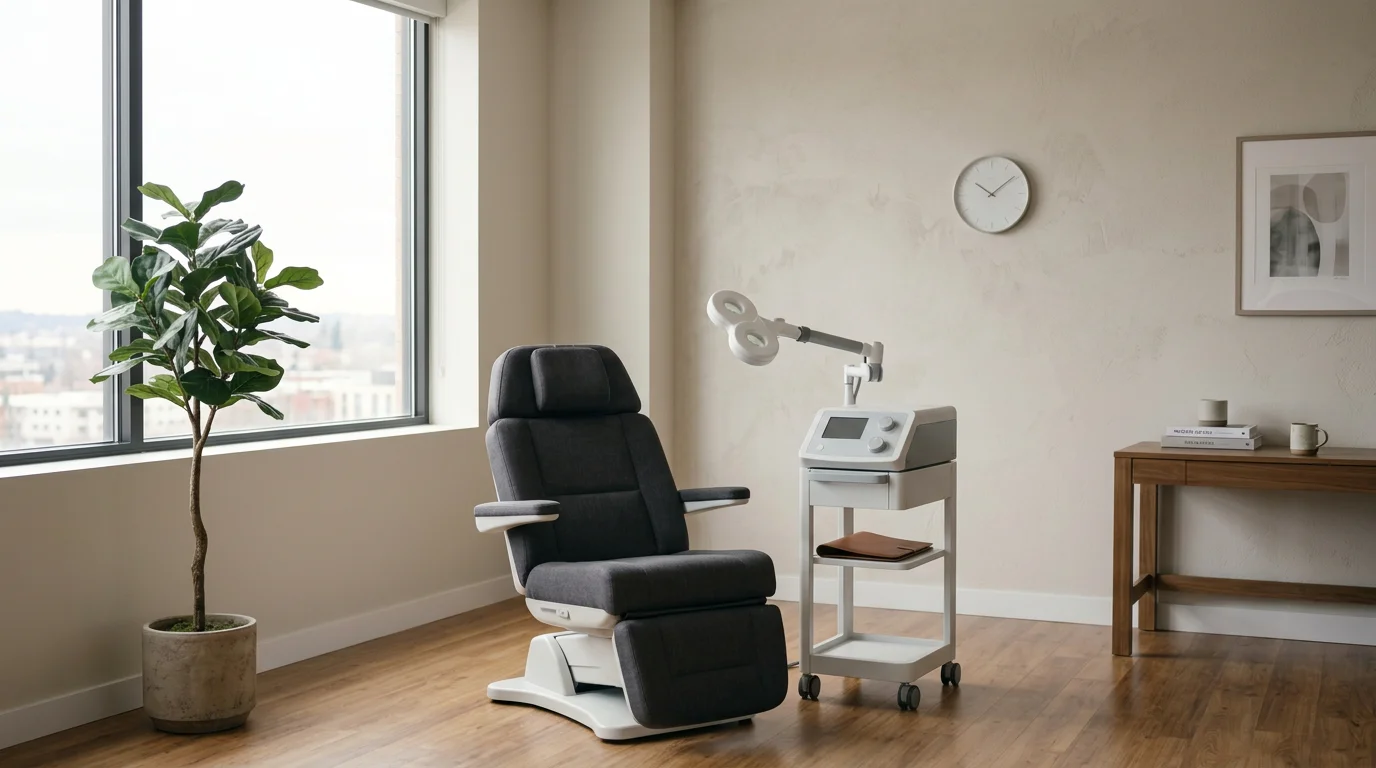
We want your TMS experience to be as comfortable, relaxing, and stress-free as possible. Because the treatment relies on magnetic energy, we’ll first ask you to remove any metallic items, like jewelry. The TMS device does make a rhythmic clicking sound, so we will provide you with soft earplugs for your comfort.
Once you are settled into our comfortable treatment chair, here is what your journey will look like:
Personalizing Your Treatment Before we begin the main session, your technician will do a quick, gentle test to find the exact magnetic strength that is right for your body. They do this by delivering a few brief pulses and watching for a slight physical response, ensuring your treatment is entirely customized to you.
The Stimulation Process Next, we gently place a small, specialized magnetic coil near the front of your head (over the prefrontal cortex). As the device delivers brief magnetic pulses, it gently wakes up and stimulates the brain cells in that specific area.
Your Treatment Schedule While the exact time can vary depending on your specific treatment plan, most sessions take less than an hour. To get the best results, patients typically come in five days a week for about four to six weeks.